You’ve almost certainly heard of ChatGPT; it became one of the fastest-adopted apps in history and reshaped how millions of people write, study, and search for answers. But knowing it exists and understanding what it actually is are two different things. Most explanations either wave their hands (“it’s AI magic”) or drown you in technical terms.
This guide does neither. It explains, in plain language, what ChatGPT is, how it manages to produce a coherent answer to almost any question, what it’s genuinely useful for, and just as important why it confidently gets things wrong sometimes. Understanding that last part is what separates people who use it well from people who get burned by it. No technical background needed.
What ChatGPT Actually Is
ChatGPT is an AI chatbot created by the company OpenAI. You type a message called a prompt, and it replies in natural, conversational language. You can ask it to explain a concept, draft an email, summarize an article, brainstorm ideas, help with code, or just answer a question, and it responds with a written reply that reads as though a person wrote it.
The name itself describes what it is. “Chat” refers to the conversational format. “GPT” stands for Generative Pre-trained Transformer. Three words that, unpacked, actually explain how it works: it generates text, it was pre-trained on huge amounts of data, and it uses a design called a transformer. We’ll come back to each.
The most useful way to think about ChatGPT is as a conversation partner rather than a search engine. A search engine points you to existing web pages; ChatGPT composes an original response for you on the spot. That difference explains both its strengths and its quirks.
How ChatGPT Works, in Plain English

Behind ChatGPT is a large language model, an AI system trained on an enormous amount of text from books, articles, websites, and other written sources. During training, it didn’t memorize that text. Instead, it learned the patterns in language: which words and ideas tend to follow one another, how sentences build into arguments, and how questions relate to answers.
Once trained, ChatGPT generates responses by doing something that sounds almost too simple to explain its ability: it predicts the next word, over and over. When you ask a question, it works out a likely first word of the answer, then the next word given that one, then the next, building the response piece by piece based on the patterns it learned.
The surprising part is what emerges from that simple process at a massive scale. By predicting one plausible word after another across billions of learned examples, ChatGPT can write essays, answer detailed questions, hold a coherent conversation, and adapt its tone all without ever “looking up” a stored answer. It’s constructing the response as it goes.
Why It Understands Your Question
The “transformer” part of GPT is the design breakthrough that made this work so well. In simple terms, it lets the model weigh how all the words in your prompt relate to each other, so it grasps context rather than reading word by word in isolation. That’s why ChatGPT can follow a nuanced request, remember what you said earlier in the same conversation, and respond appropriately; it’s tracking the relationships between everything you’ve written.
It’s worth being clear about what this means, though: ChatGPT is predicting language that fits the patterns it learned, not thinking or understanding the way a human does. It’s an extraordinarily capable text generator, not a mind. Keeping that in view explains everything that follows.
Why ChatGPT Sometimes Gets Things Wrong
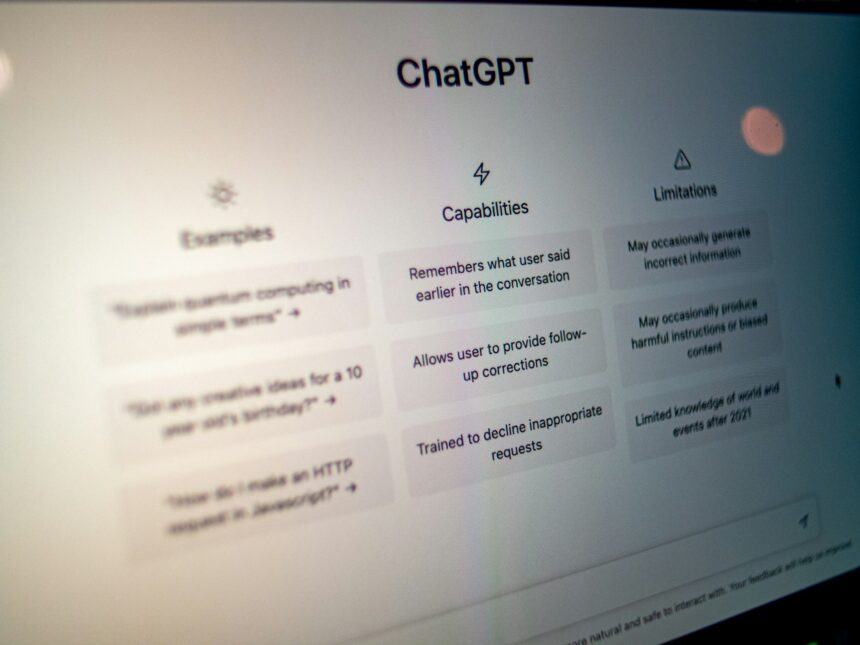
This is the most important thing to understand about ChatGPT and the part casual users most often miss. Because it generates plausible-sounding text rather than retrieving verified facts, it can produce answers that sound completely confident and are completely wrong. This behavior is called a “hallucination.”
The reason is baked into how it works. ChatGPT isn’t consulting a database of true facts; it’s predicting what words should come next. Usually the most probable continuation is also accurate. But sometimes it isn’t, and the model has no built-in sense of “I don’t actually know this.” It can invent statistics, misstate facts, and cite books or studies that don’t exist, all in the same fluent, authoritative tone it uses for correct answers.
The practical consequence: treat ChatGPT as a knowledgeable but unreliable assistant. Use it to understand ideas, draft text, and think through problems, but verify anything factual that matters (numbers, dates, citations, medical or legal information) against a trustworthy source before relying on it.
What ChatGPT Can Do
Within its limits, ChatGPT is remarkably versatile. Common uses include:
- Explaining things, breaking down a hard concept at whatever level you need
- Writing and editing drafting emails, essays, and messages, or improving your own text
- Summarizing and condensing long articles or documents into key points
- Brainstorming generating ideas, angles, names, or plans
- Answering questions on almost any topic, with the accuracy caveat above
- Helping with code writing, explaining, and debugging for programmers
- Practicing and role-playing rehearsing an interview or a difficult conversation
In its current versions, ChatGPT can also do more than text: depending on your plan, it can search the web for current information, generate images, analyze uploaded files, and hold spoken conversations through voice mode. These extend it well beyond the simple text chatbot it started as.
What ChatGPT Can’t Do Well
Knowing the limits is part of using it wisely:
- It isn’t a reliable source of facts on its own, for the reasons above.
- Its built-in knowledge has boundaries. Without web access, it may not know about very recent events, since its core training has a cutoff.
- It doesn’t truly reason the way a person does, so it can stumble on logic puzzles or precise math.
- It reflects biases present in its training data.
- It can’t verify its own accuracy, which is why the human check matters.
None of this makes it unreliable in a way that makes it useless; it makes it a powerful tool that works best with a person guiding and checking it.
Free vs. Paid: What It Costs
ChatGPT has a genuinely useful free tier, so you can try everything above without paying. As of 2026, OpenAI offers several individual plans: a free tier, a lower-cost Go option, Plus at around $20 per month, and a higher-end Pro plan aimed at heavy research and professional use. Paid plans add access to more capable models, higher usage limits, and priority access during busy periods. Pricing and plan names change fairly often, so check OpenAI’s official pricing page for current details.
For most people starting out, the free version is more than enough to understand what ChatGPT is and whether it’s useful to you. One thing worth knowing: OpenAI has begun testing ads on its free and lower tiers, and on the individual plans your conversations may be used to help train its models unless you opt out in your account setting. It’s worth adjusting if you plan to discuss anything personal.
A Quick Note on Privacy
Because ChatGPT processes whatever you type on OpenAI’s servers and may use consumer-plan conversations for training unless you opt out, it’s wise to keep sensitive information out of your chats—passwords, financial details, and confidential personal or work data. For everyday questions and drafting, this isn’t a concern; for private matters, a little caution goes a long way.
The Takeaway
ChatGPT is an AI chatbot that generates conversational, human-like responses by predicting text one word at a time, based on patterns it learned from a massive amount of writing. That simple mechanism, at an enormous scale, is what lets it explain, draft, summarize, and answer so fluently, and it’s also why it can be confidently wrong, since it’s producing plausible language rather than looking up verified facts. Understood correctly, it’s one of the most useful tools available: a fast, capable assistant for thinking, writing, and learning, as long as you stay in charge and verify what matters. The best way to grasp what it really is isn’t to read more about it; it’s to open the free version, ask it something you already know the answer to, and watch how it responds.
Suggested Internal Links:
- Article: How to Use ChatGPT for Beginners
- Article: What Is Artificial Intelligence? A Simple Explanation
- Article: How Does AI Work? A Beginner’s Guide
- Article: What Is Generative AI?
External Sources:
- OpenAI: official ChatGPT product and pricing pages
- IBM—”What is a large language model?” explainer
- MIT Technology Review — coverage of ChatGPT and language models
- Reporting on ChatGPT hallucinations and reliability (reputable technology outlets)
Read More on AI GLOBAL CLASS