Ask ten people what artificial intelligence is and you’ll get ten answers, most of them borrowed from movies. Some picture a robot that thinks like a person. Others picture something vaguely magical happening inside a phone. The reality is less dramatic and, honestly, more interesting: AI is software that learns patterns from data and uses those patterns to make predictions or decisions.
That’s the whole idea in one sentence. Everything else—chatbots, self-driving cars, recommendation feeds, and image generators—is a variation on it. This guide explains what AI actually is without the jargon, how it works in plain terms, the different types you’ll hear about, where it genuinely helps, and where it falls short. No computer science background required.
The Simplest Honest Definition
Artificial intelligence is the field of building computer systems that can perform tasks we normally associate with human intelligence, things like understanding language, recognizing images, solving problems, and making decisions.
The key word is tasks. A regular program follows exact instructions a human wrote: “If the customer’s total is over $50, apply free shipping.” Every step is spelled out. AI is different. Instead of being told the rules, it’s shown thousands of examples and figures out the patterns itself.
Think of the difference between a calculator and a child learning to recognize dogs. The calculator was programmed with the exact rules of arithmetic. The child was never given a definition of “dog”; they saw many dogs, got corrected a few times, and gradually learned to spot one they’d never seen before. Modern AI works far more like the child than the calculator.
How AI Actually Works (Without the Math)
Most of the AI people talk about today run on a process called machine learning. The name is literal: the machine learns from examples rather than following handwritten rules.
Here’s the process stripped down to four steps:
- Data. The system is given a large collection of example photos, sentences, transactions, whatever the task needs.
- Training. It looks for patterns in that data, adjusting itself over and over to get better at a specific goal, like “tell spam from real email.”
- A model. The result of all that training is a “model,” essentially a compressed summary of the patterns it found.
- Prediction. When you give the trained model something new, it uses those patterns to make its best guess.
A spam filter is the classic example. Nobody sat down and wrote a rule for every possible junk email that would be impossible. Instead, the filter was trained on millions of emails already labeled “spam” or “not spam,” learned what spam tends to look like, and now flags new messages it’s never seen before.
Where “Deep Learning” Fits In
You’ll often hear “deep learning” and “neural networks” alongside AI. These aren’t separate technologies competing with machine learning; they’re a powerful type of it.
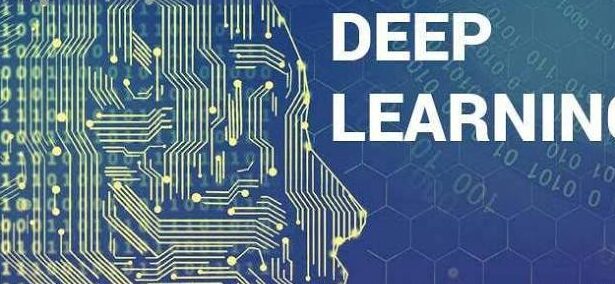
A neural network is a system loosely inspired by how brain cells connect, built from many simple units arranged in layers. “Deep” just means there are a lot of layers. This approach turned out to be exceptionally good at messy, real-world data like images, sound, and language, which is why it powers most of the AI you interact with today.
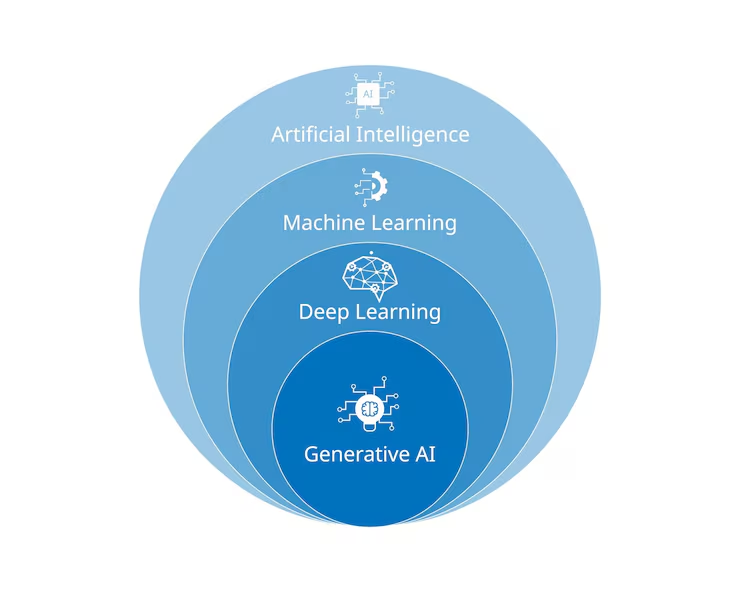
It helps to picture the nesting: artificial intelligence is the broad field, machine learning is the main approach inside it, and deep learning is a particularly effective technique inside machine learning. Each is a subset of the one before it.
What Makes Today’s AI Feel Different
If AI has existed for decades, why does it suddenly feel everywhere? The short answer is a technology called the large language model, or LLM, the engine behind tools like ChatGPT, Gemini, and Claude.
An LLM is trained on enormous amounts of text and learns, in effect, to predict what word is likely to come next in a sequence. Stack that ability up across billions of examples, and something surprising emerges: the system can hold a conversation, summarize a document, write code, or explain a concept, all by repeatedly predicting plausible next words.
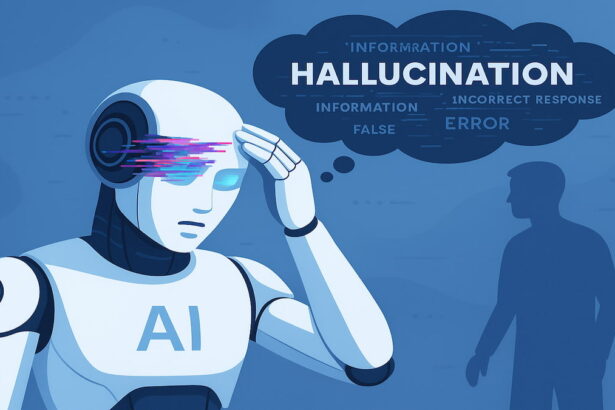
This is worth sitting with, because it explains both the strengths and the weaknesses. An LLM isn’t looking anything up in a database of facts, and it isn’t “understanding” in the human sense. It’s generating text that fits the patterns it learned. That’s why it can sound completely confident while being completely wrong—a behavior known as a “hallucination.” The fluency is real; the reliability is not guaranteed.
The Types of AI You’ll Actually Encounter
People use “AI” as a single word, but a few useful distinctions clear up a lot of confusion.
Narrow AI vs. General AI
Narrow AI is designed to do one kind of task. This is every AI that exists today, without exception. A chess engine, a face-unlock feature, a translation app, or even a sophisticated chatbot—each is narrow, no matter how impressive it looks. A chess AI can crush a grandmaster but can’t write you an email.
General AI (often called AGI) would be a system that can learn and reason across any task the way a human can, moving flexibly from cooking to accounting to comforting a friend. It does not exist yet. Whether it’s a few years away or many decades away is a genuine debate among serious researchers; anyone claiming certainty is selling something.
Keeping these two apart is the single best defense against AI hype. When a headline blurs today’s narrow tools with a hypothetical general intelligence, it’s usually creating drama, not clarity.
Predictive AI vs. Generative AI
A more practical split for everyday use:
- Predictive AI classifies or forecasts. It answers “Which category is this?” or “What’s likely to happen next?” — the spam filter, the fraud alert, the movie recommendation.
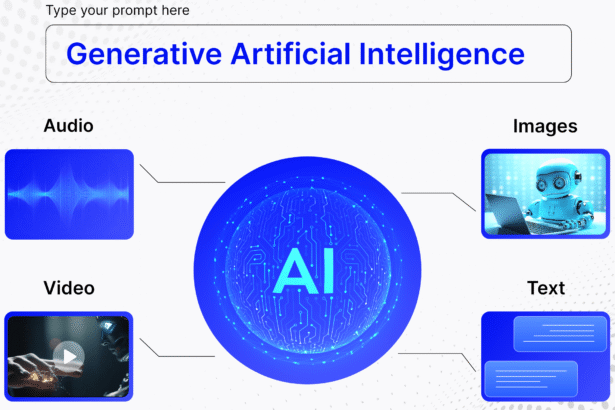
- Generative AI creates new content. It answers “make me something” text, images, audio, or code. This is the category that exploded into public view and includes the chatbots and image tools most people now use.
| Aspect | Predictive AI | Generative AI |
|---|---|---|
| Main job | Sorts, scores, or forecasts | Produces new content |
| Typical output | A label or number | Text, image, audio, code |
| Everyday example | Fraud detection, recommendations | ChatGPT, image generators |
AI You Already Use Without Noticing
The most common misconception is that AI is something new and exotic you have to seek out. In practice, it’s been quietly running parts of daily life for years:
- Recommendations on streaming services and shopping sites, guessing what you’ll want next
- Maps and navigation, predicting traffic and rerouting you in real time
- Email, filtering spam, and suggesting quick replies
- Photos, grouping pictures by face or letting you search “beach”
- Banking, flagging a card transaction that doesn’t fit your usual pattern
- Voice assistants, turning your speech into commands
None of these are “thinking.” Each is a narrow system doing one job well, trained on patterns in huge amounts of data.
What AI Is Genuinely Good At and Where It Fails
Being clear-eyed about both sides is more useful than either fear or hype.
AI is strong at tasks with lots of data and clear patterns: spotting objects in images, translating between languages, drafting and summarizing text, catching anomalies in transactions, and handling repetitive work at a scale and speed no human could match. It never gets tired or bored, which is a real advantage for monotonous tasks.
The limits are just as important:
- It can be confidently wrong. Especially with generative tools, plausible-sounding errors are common. Verify anything that matters.
- It only knows what it was trained on. Gaps, biases, or outdated information in the training data show up in the output. If the data reflected human bias, the AI often will too.
- It doesn’t understand meaning or context the way people do. It matches patterns; it doesn’t grasp why.
- It can’t reliably reason about brand-new situations that don’t resemble its training.
- It raises real questions around privacy, accuracy, and how the data behind it was collected.
The honest summary: today’s AI is an extraordinarily capable pattern machine, not a mind. Treating it as a fast, tireless assistant that needs supervision is far closer to the truth than treating it as either a genius or a threat.
A Very Short History, for Context
The term “artificial intelligence” dates back to the 1950s, and the field went through long stretches of high hopes followed by disappointment periods researchers now call “AI winters.” Progress stayed mostly academic for decades.
Three things changed that in the 2010s and 2020s: vastly more data (thanks to the internet), far more powerful computer chips, and better learning techniques, especially deep learning. The public tipping point came when generative chatbots became good enough for anyone to use with plain language. The underlying ideas aren’t brand new; the scale and accessibility are.
The Takeaway
Artificial intelligence isn’t magic, and it isn’t the thinking robot of science fiction. It’s software that learns patterns from large amounts of data and uses them to predict, classify, or generate nothing more mysterious than that, and nothing less powerful. Every AI in existence today is narrow, built for specific tasks, and only as good as the data and supervision behind it. Once you hold onto that one idea pattern from data, not genuine understanding, most of the news, the hype, and the fear become far easier to read clearly. The best way to get comfortable with it isn’t to study it in the abstract; it’s to try a free tool, watch where it shines, and notice exactly where it slips up.
External Sources: