Software transcription tools work well when your meetings happen on video calls but for in-person conversations, lecture capture, client meetings, field interviews, and physical rooms where a bot can’t join, you need hardware. The AI transcription device market has matured considerably in 2026, and the options are meaningfully different from one another in terms of form factor, compliance, battery life, and the subscription cost that follows the hardware purchase.
That last point is worth stating upfront: every AI transcription device has two costs. The hardware price is what you pay once; the AI subscription is what you pay to keep the transcription and summaries running. Understanding both before you buy determines whether the device actually fits your budget.
This guide covers the main hardware options in 2026, organized by use case, with verified pricing for both the device and the ongoing subscription.
The Limitless Pendant Is Gone: What Replaced It
For anyone who had their eye on the Limitless Pendant: Meta acquired Limitless in December 2025, and the device was discontinued. Access to transcripts from existing users will end with support in late 2026, and exporting is not possible after that. Any article still recommending it is out of date.
The market moved quickly to fill that gap. The alternatives that emerged Vibe Dot, Plaud NotePin S, Soundcore Work, and Omi are all shipping as of October 2026 and are the realistic options.
Quick Comparison
| Device | Price | Form Factor | Battery | Free Transcription | Best For |
|---|---|---|---|---|---|
| Plaud Note Pro | $189 | Flat pocket card | 50hr endurance mode | 300 min/month | In-person, phone calls, tables |
| Plaud NotePin S | $179 | Wearable clip/pendant | 20 hours | 300 min/month | All-day wearable, discreet |
| Vibe Dot | $199 | Wearable clip | 30+ hours | 300 min/month | Enterprise, compliance-heavy |
| Soundcore Work | $159.99 | Coin-clip or lanyard | 8hrs (32 with case) | 300 min/month | Budget entry, multilingual |
| Omi | $89–$179 | Pendant | Variable | 1,200 min/month | Developers, open-source |
| Phone (iOS 18 / Pixel Recorder) | $0 | Your existing phone | Your phone’s battery | Unlimited | Casual, occasional use |
Plaud Note Pro: The Best Dedicated Recorder for Most People
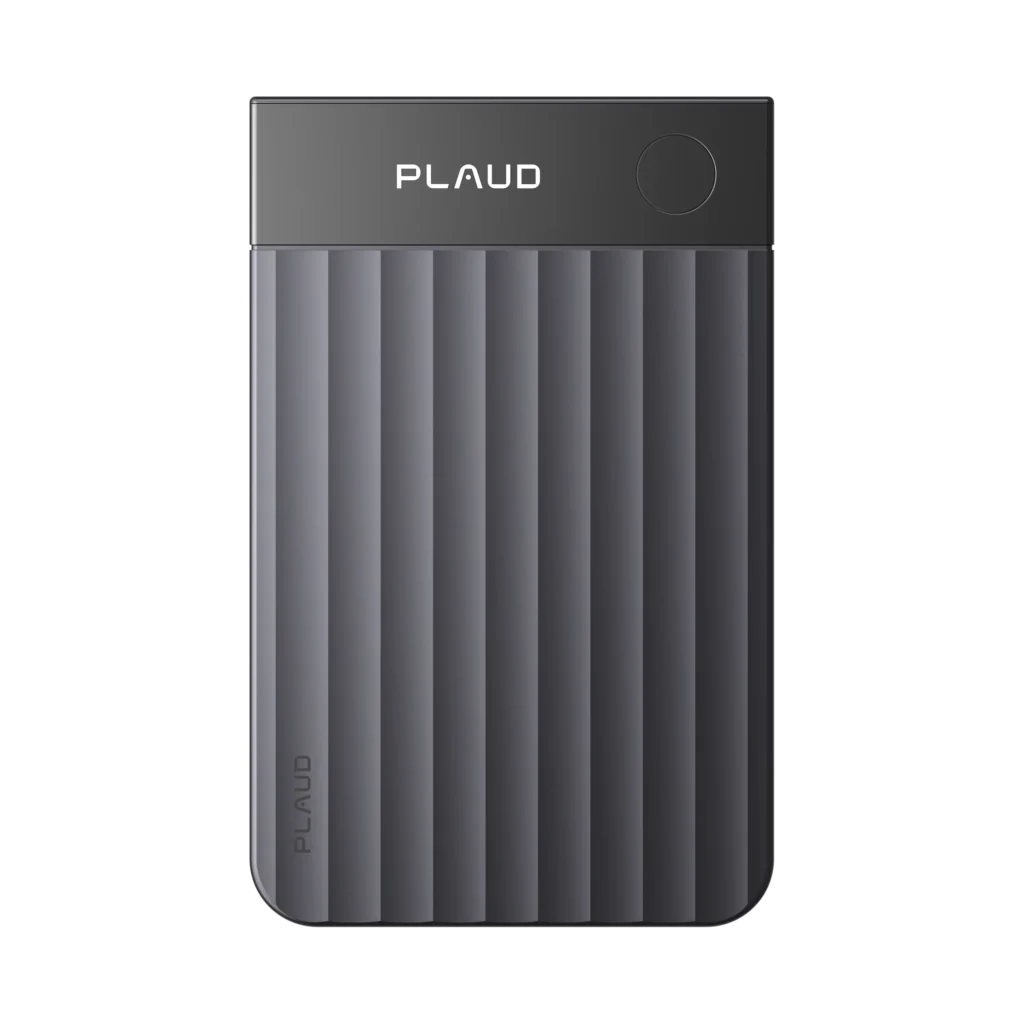
13 Plaud Note Pro costs $189 and is a standalone hardware recorder paired with Plaud Intelligence, an AI engine that turns conversations into transcripts, summaries, and action items. 14 The Note Pro costs $189 versus $159 and adds a small AMOLED display, four microphones instead of two, a 16.4-foot pickup range instead of 9.8 feet, automatic switching between call and meeting modes, Apple Find My, and a 50-hour endurance battery mode.
The credit-card-thin form factor is one of its standout features. It sits flat on a table without drawing attention, which matters in professional contexts where a phone or a visible bot would change the dynamic of a conversation.
Subscription costs, verified: 12 The free Starter plan gives 300 minutes per month about five hours. One heavy meeting day uses that up. The Pro plan is $99.99 per year (approximately $8.34 per month), giving 1,200 minutes per month about 20 hours. The Unlimited plan is $239.99 per year (approximately $20 per month). 14 Most people who use the device daily land on Pro, which puts the true first-year cost around $259 reasonable for a tool that replaces post-meeting cleanup. 13 Plaud Note Pro records and stores audio on its own without a subscription needed for that. But AI transcription and summaries run through Plaud Intelligence, and that requires a plan.
The honest limitation: 17 Transcription happens in the cloud, not on-device, so you need connectivity to process recordings. Audio captured offline is stored and processed when you reconnect. 12 Skip it entirely if your meetings are 90% Zoom, where software tools like Granola or Otter do the job better.
Who it suits: consultants, sales professionals, legal and medical practitioners who meet clients in person, and anyone who records phone calls as well as in-person conversations.
Plaud NotePin S: Best Wearable for All-Day Capture
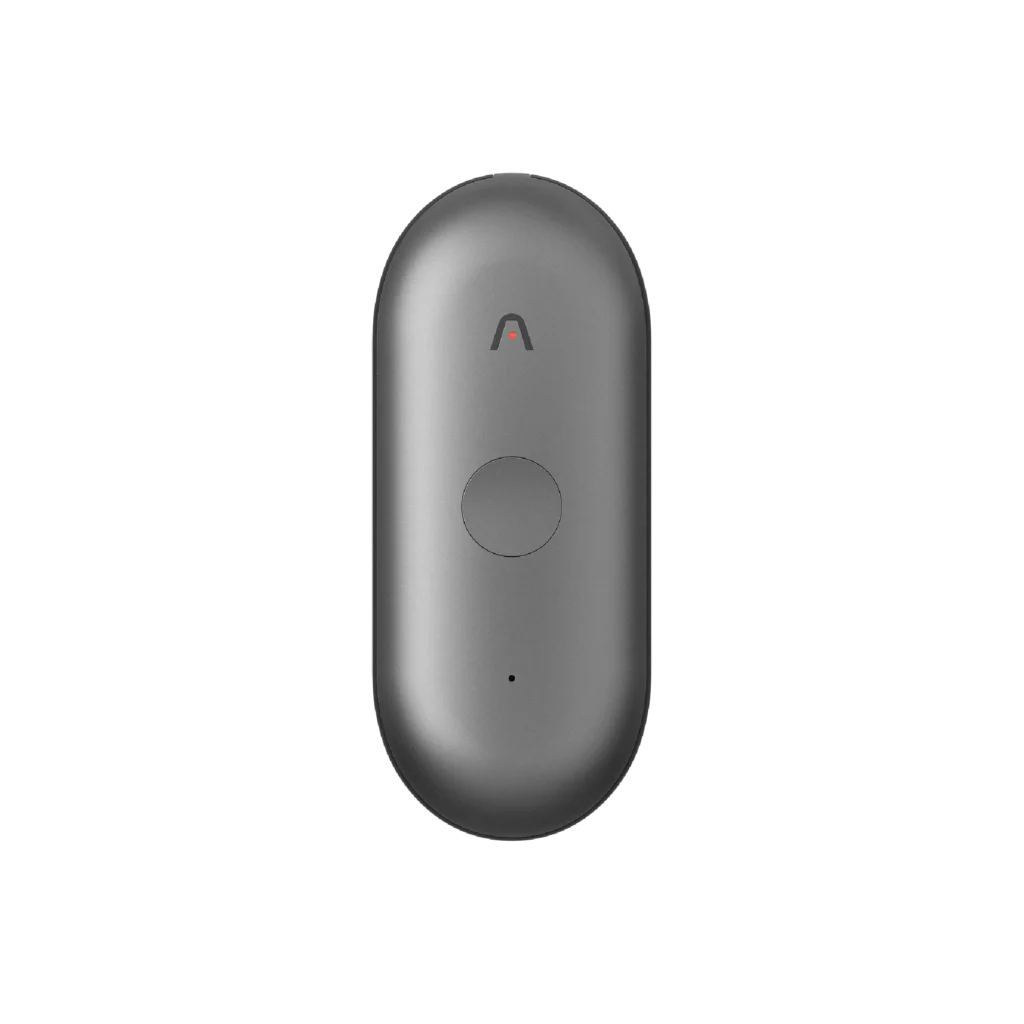
14 The NotePin S is $179 with a 320mAh battery, a tactile record button, press-to-highlight, and four wearing accessories in the box. 18 Do not confuse the original NotePin with the newer NotePin S. The company’s comparison says the S adds a tactile button, Press to Highlight, and all four wearing accessories.
The NotePin S wears as a lapel clip, badge, lanyard pendant, or magnetic accessory which makes it more appropriate for long days where you’re moving between rooms, attending conferences, or capturing conversations throughout the day rather than placing a device on a specific surface.
All Plaud devices share the same subscription structure. 17 The NotePin S hardware is $179; subscription tiers are the same as other Plaud devices 300 free minutes per month, Pro at $99.99/year, and Unlimited at $239.99/year.
Who it suits: journalists, event professionals, researchers conducting interviews, and anyone who wants AI note capture without carrying a separate device beyond what clips to their clothing.
Vibe Dot: Best for Regulated Industries and Compliance Requirements
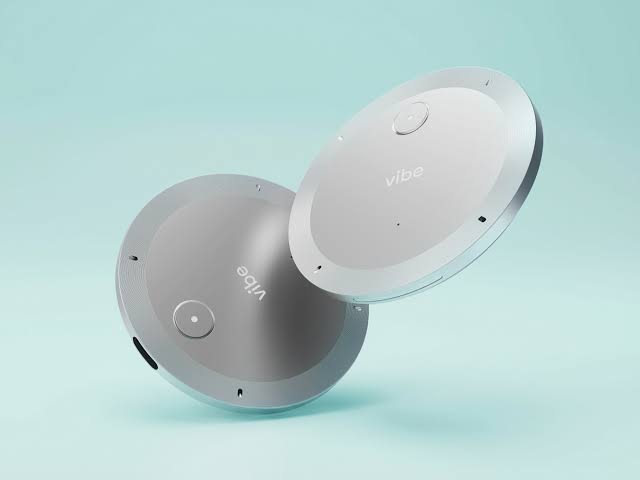
2 Vibe Dot is the strongest all-around pick at $199: a 5-mic array (4 MEMS + 1 VPU), 30-plus hours of continuous recording, 64GB of onboard storage, and the broadest compliance stack in this comparison SOC 2, HIPAA, NDAA, FERPA, and TPM 2.0.
If you work in healthcare, education, legal, defense contracting, or any regulated environment where recording must meet documented compliance standards, 19 Vibe Dot’s 5-mic system, including a bone-conduction sensor, gives it an edge in noisy environments. It also offers deeper compliance certifications (HIPAA, FERPA, NDAA) compared to Plaud.
Subscription costs verified: 21 The free Starter tier includes 300 minutes of AI transcription per month across nearly 200 languages. Advanced AI features extended memory retention, deeper retrieval, agentic integrations require a Vibe AI Pro plan at $9 per seat per month billed annually.
The cross-session memory feature distinguishes Vibe Dot from Plaud and Soundcore Work: rather than treating each recording as an independent session, Vibe AI maintains a persistent memory graph across conversations useful for anyone who needs to search and reference what was discussed across weeks or months of meetings.
The honest limitation: 24 The automatic capture mode is labeled Beta, and buying a device for a feature still in testing is how people end up disappointed. Tap-to-record and press-and-hold modes are fully shipping.
Who it suits: healthcare professionals, educators, legal practitioners, enterprise teams, and anyone who needs the compliance certifications documented rather than implied.
Soundcore Work: Best Budget Entry Point From a Recognizable Brand
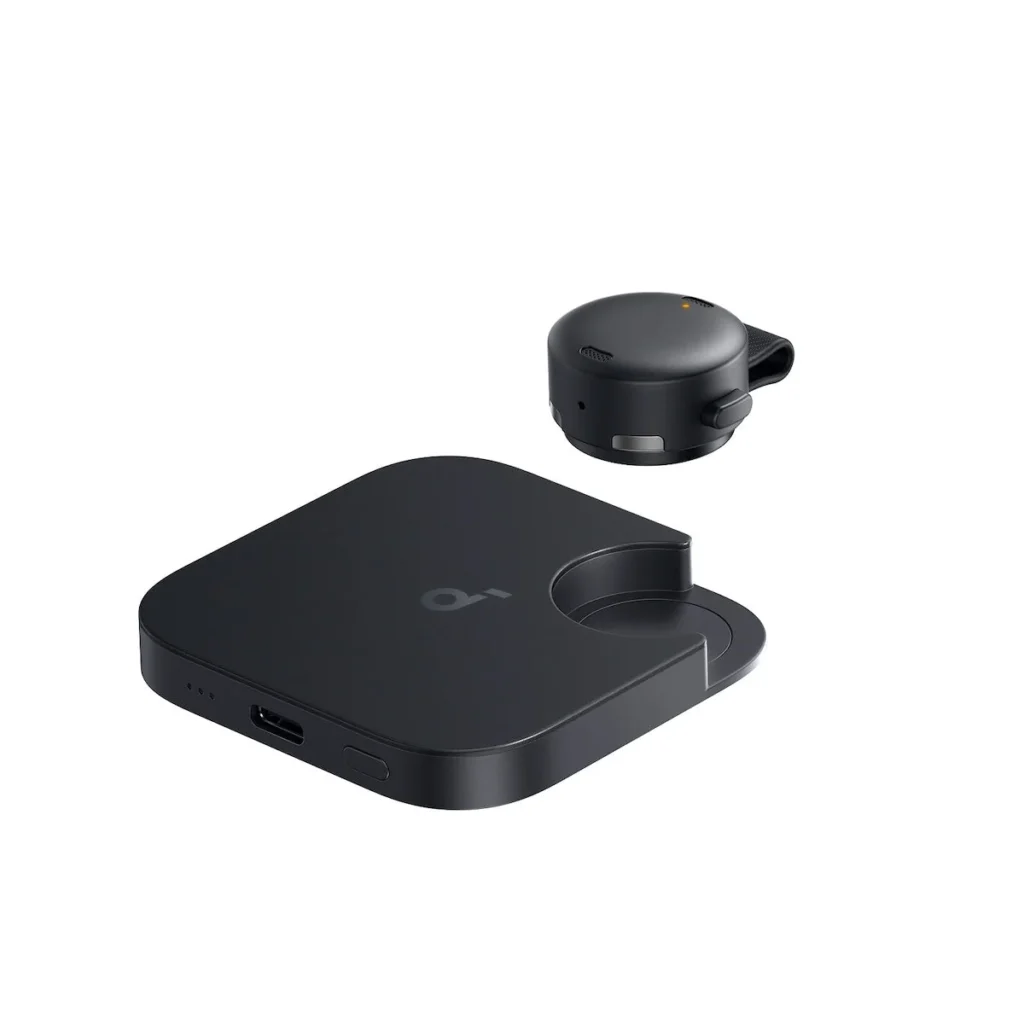
23 Soundcore Work is a coin-sized recorder from Anker that clips to your shirt or hangs from a lanyard. At $159, it’s the big brand’s first serious attempt at an AI note-taker solid hardware, but software that’s still catching up.
The Anker brand matters to some buyers because it implies a certain baseline of hardware quality and customer support that’s easier to trust than newer specialist companies. The hardware is genuinely capable for the price.
Pricing: 22 Hardware: $159.99. Subscription: Free 300 minutes per month, Pro $15.99 per month or $99.99 per year, Unlimited $239.99 per year. 2 Soundcore Work suits multilingual travel, with 150-plus language support and AES-256 encryption for $159. 23 You get 300 free minutes of transcription per month about an hour and fifteen minutes per week. That’s enough for very light use, but if you’re in meetings daily, you’ll need the Pro plan at $15.99 per month.
The limitation worth naming: The battery is 8 hours directly and 22 extended to 32 hours with the included case. If you forget the case, you have one working day. Vibe Dot and Plaud Note Pro both handle longer continuous recording without that caveat.
Who it suits: professionals who want a trusted consumer brand’s first AI recorder, multilingual teams, and buyers who are comfortable with first-generation software that’s actively improving.
Omi: Best for Developers and Open-Source Users
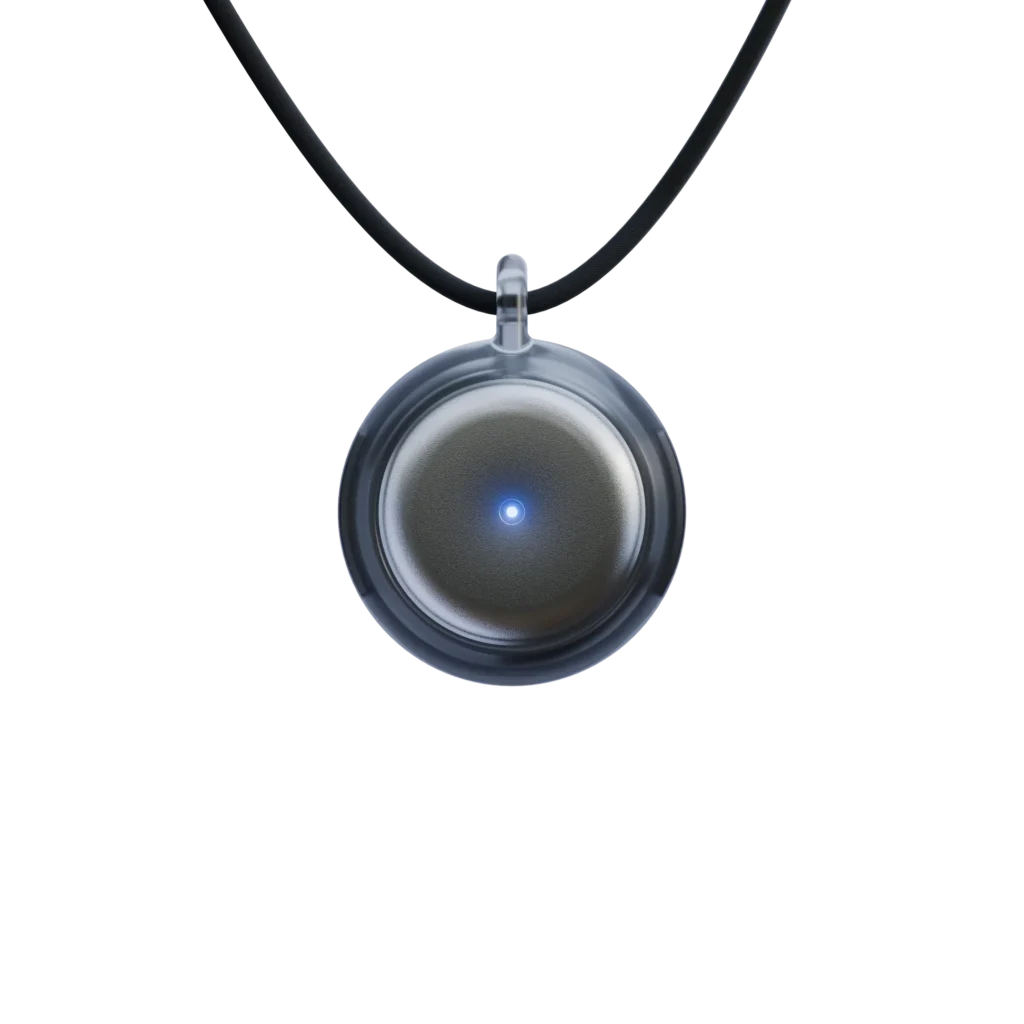
23 Omi is fully open-source, both hardware and software. For $89 to $179 (prices vary by purchasing channel and timing), you get a pendant-sized device that pairs with your phone and records conversations. The community has built plugins for everything: sales coaching, translation, and more. 20 Omi is the cheapest dedicated AI recorder in this comparison, and it punches above its price on two dimensions: open-source architecture and unlimited on-device transcription with 1,200 free cloud minutes per month. The open-source community means customizable integrations, hackable pipelines, and a level of control over your own data that no closed-platform device can match.
That 1,200-minute monthly free allowance is notably more generous than the 300 minutes offered by Plaud, Vibe Dot, and Soundcore Work on their free tiers. For light users who don’t need the polished software experience of the mainstream options, this makes Omi’s ongoing cost significantly lower.
The honest limitation: 21 Omi has no onboard buffer and requires a live Bluetooth connection a dropped connection causes issues. Closed-platform devices like Vibe Dot store recordings locally and sync later. For anyone in environments with unreliable connectivity, this is a meaningful difference.
Who it suits: developers, students who want maximum customizability, privacy-focused users who want to self-host their data, and anyone comfortable with a less polished consumer experience in exchange for control.
The Zero-Cost Option: Your Phone
Before spending any money on hardware, it’s worth considering what you already own. 4 Google Pixel Recorder (free, Android only, on-device transcription) and iOS Voice Memos with iOS 18 auto-transcription are the best zero-cost options.
iOS 18’s Voice Memos transcribes automatically on-device. Pixel Recorder on Android does the same with speaker labeling and searchable transcripts. Both run on your existing phone, process locally (no cloud upload), and cost nothing.
The limitations are real: phone microphones are optimized for voice calls, not room capture. In a noisy conference room with multiple speakers at a distance, a dedicated device’s directional microphone array produces significantly better transcripts. For a one-on-one conversation held close to your phone, the difference is marginal.
For occasional, low-stakes capture, try your phone first before purchasing any hardware.
The Subscription Math You Need to Do Before Buying
Every device on this list except a phone comes with ongoing subscription costs. The total cost across three years looks very different from the hardware price alone. 17 Don’t just compare device prices factor in subscriptions.
A back-of-envelope calculation using Pro-tier annual billing:
- Plaud Note Pro + Pro ($99.99/yr): $289 year one, $100/yr thereafter
- Plaud NotePin S + Pro: $279 year one, $100/yr thereafter
- Vibe Dot + Pro ($108/yr): $307 year one, $108/yr thereafter
- Soundcore Work + Pro ($99.99/yr): $260 year one, $100/yr thereafter
- Omi + free tier: $89–$179 once, $0/yr for 1,200 min/month
14 Do the hours math first. Add up the conversations you’d genuinely want transcribed in a normal month. Under 5 hours, the free tier carries you and the device is a one-time cost. Between 5 and 20 hours, Pro is the honest number.
Unused transcription minutes don’t carry over between billing cycles on any Plaud plan.
Choosing the Right Device
The decision tree is simpler than the feature lists suggest:
Do your meetings happen on Zoom, Teams, or Meet more than 90% of the time? Stop here. A hardware device is unnecessary software tools like Otter.ai, Fathom, or Fireflies.ai handle this better at lower cost.
Are you in a regulated industry requiring documented compliance (healthcare, legal, defense, education)? Vibe Dot ($199) is the only device here with the full compliance stack.
Do you want the most mature, polished hardware recorder for in-person and phone calls? Plaud Note Pro ($189) for desk and table use; Plaud NotePin S ($179) for all-day wearable.
Are you primarily a developer or want to own your data pipeline? Omi ($89+) with its 1,200 free monthly minutes and open-source flexibility.
Budget matters most and you’re comfortable with first-gen software? Soundcore Work ($159.99) is the cheapest full-featured option from a brand with an established support track record.
The Takeaway
The best AI transcription device in 2026 depends entirely on where your conversations happen and what compliance your organization requires. Plaud Note Pro is the most mature hardware choice for in-person professional meetings. Vibe Dot leads on compliance and cross-session memory. Soundcore Work is the accessible entry point from a brand you already know. Omi rewards developers and privacy-focused buyers with open-source control and a generous free tier. And for anyone who primarily meets on video calls, the hardware case barely exists the software tools covered in our companion article handle that context more elegantly at lower cost. Do the subscription math before you buy: the device is rarely the largest three-year expenditure.
Suggested Internal Links:
- Article: Best AI Tools for Transcribing Audio and Meetings “the best AI transcription software and apps for meetings”
- Article: Best AI Note-Taking Tools for Students in 2026 “the best AI note-taking tools for students”
- Article: Best Free AI Tools for Everyday Use “the best free AI tools across different tasks”
Read More On AI GLOBAL CLASS